
December 2025Duval CountyBrush n’ Burn: Grassland Restoration at La Copita
In Duval County, the Kershaw family has actively engaged in wildlife management for over 20 years, centering their ranching decisions around northern bobwhite quail. While annual maintenance including mechanical brush control and prescribed burning had been part of their long-term routine, a substantial portion of the ranch had crossed a threshold where routine maintenance alone could no longer hold back encroaching mesquite.
To restore diverse native grasslands, the Kershaws partnered with Andres Rosales, Coordinating Wildlife Biologist with PF/QF, to implement a targeted restoration plan:
Mechanical Brush Sculpting (56 acres): Utilizing mechanical dozing to strategically thin dense mesquite thickets. Opening the canopy allowed native grasses and forbs to germinate while retaining beneficial woody cover for wildlife.
Patch-Burn Grazing (42 acres): Shifting to a patch-burn grazing model to break up uniform vegetation, enhance cattle utilization, and boost forb and grass diversity.
This patch-burn approach is especially crucial for controlling Tanglehead, a dominant native grass species on the ranch known to aggressively outcompete other plants. Strategic cattle grazing on freshly burned patches keeps Tanglehead at native densities, maintaining a rich variety of native herbaceous plants.
The sculpted canopy and strategic burning regime have transformed the area into a highly productive grass-brush mosaic that supports quail, white-tailed deer, and livestock while offering expanded hunting and grazing opportunities. Moving forward, the Kershaws plan to treat remaining acres and maintain a regular 3- to 5-year burn cycle tailored to rainfall, ensuring long-term habitat quality across La Copita.
Andres Rosales dozing invasive mesquites
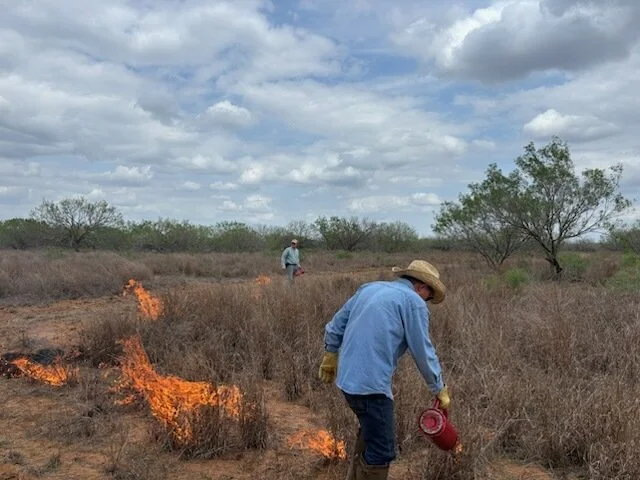
Andres & Mr. Kershaw starting burn
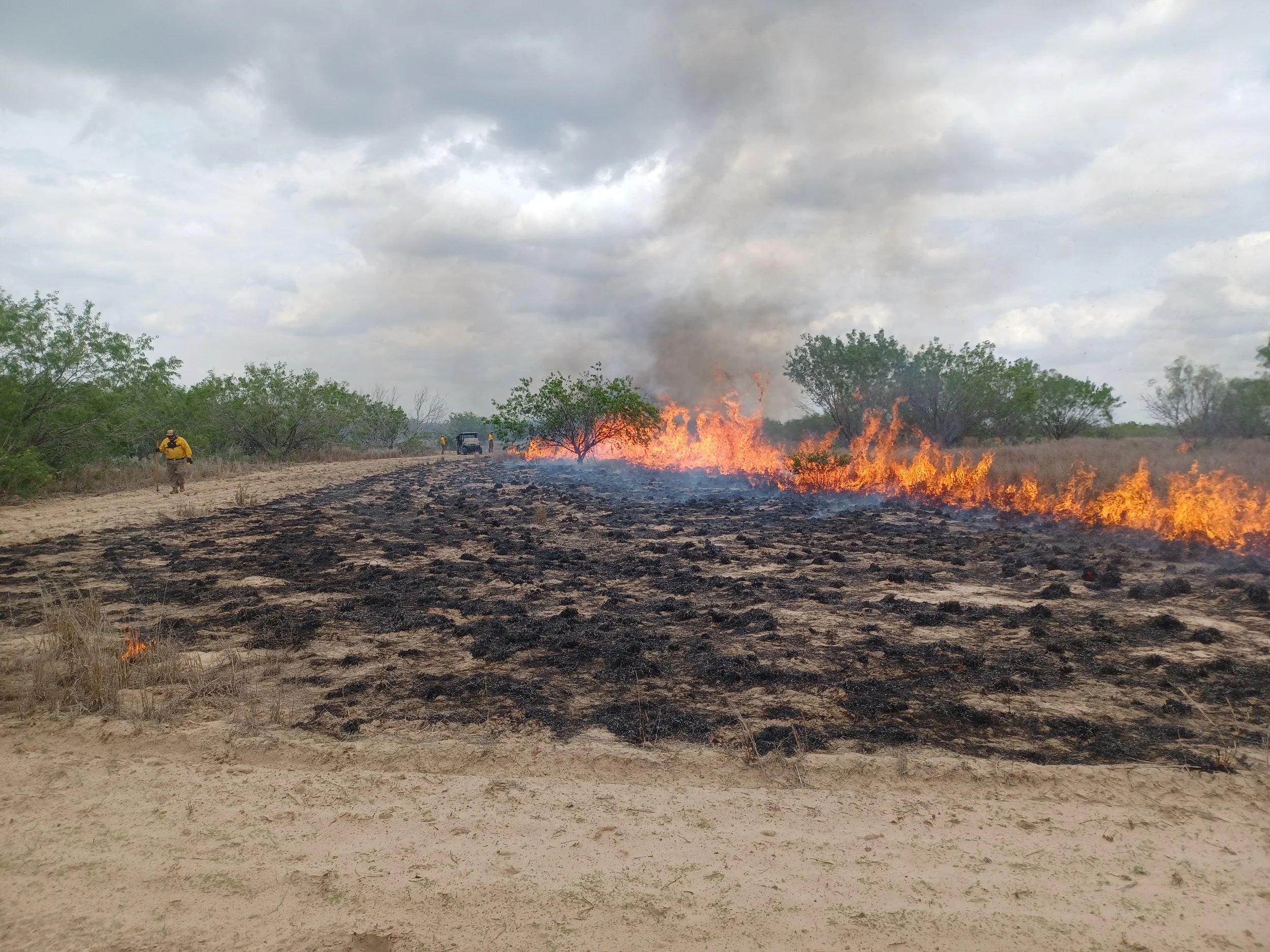
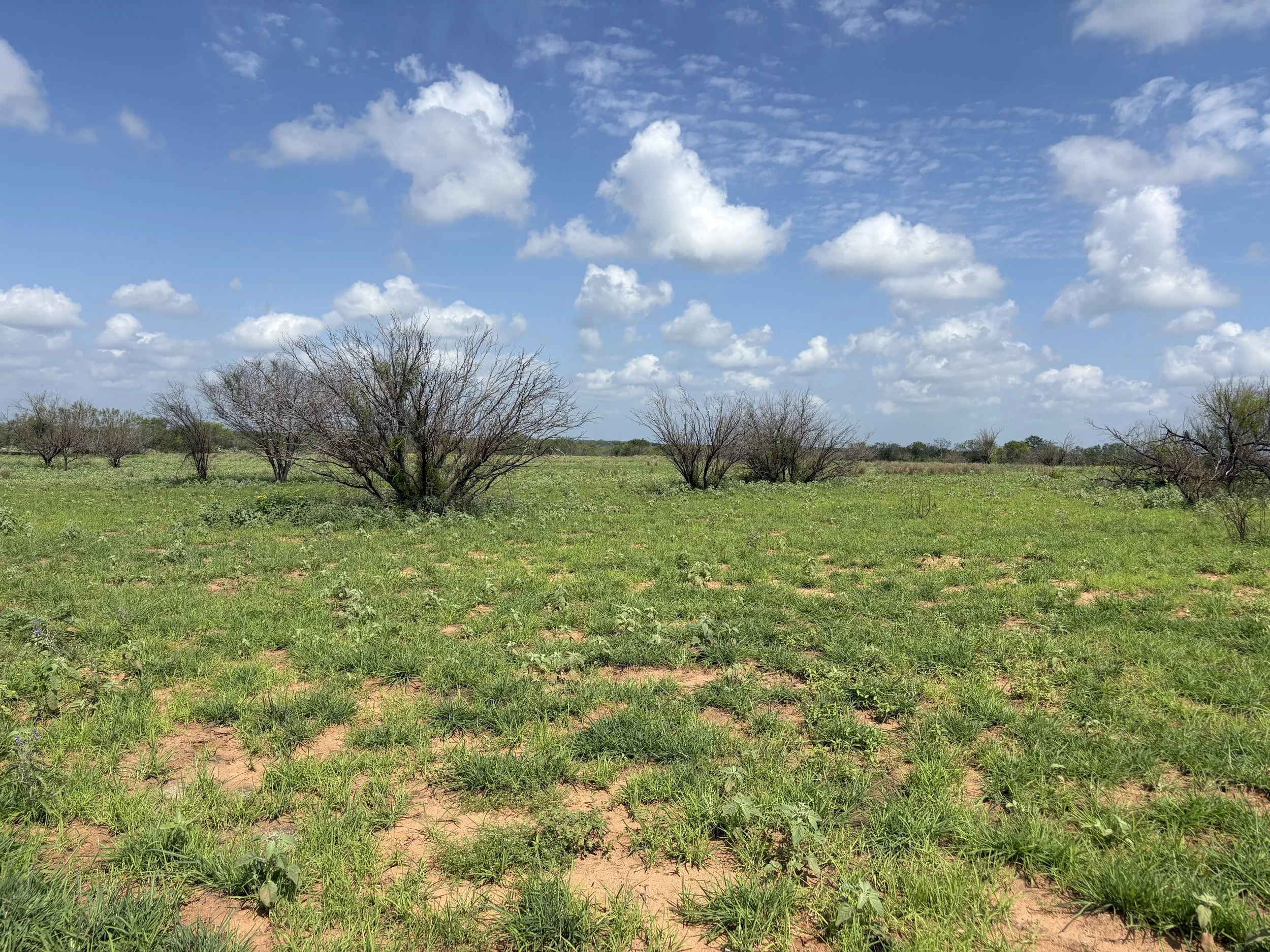
Post burn
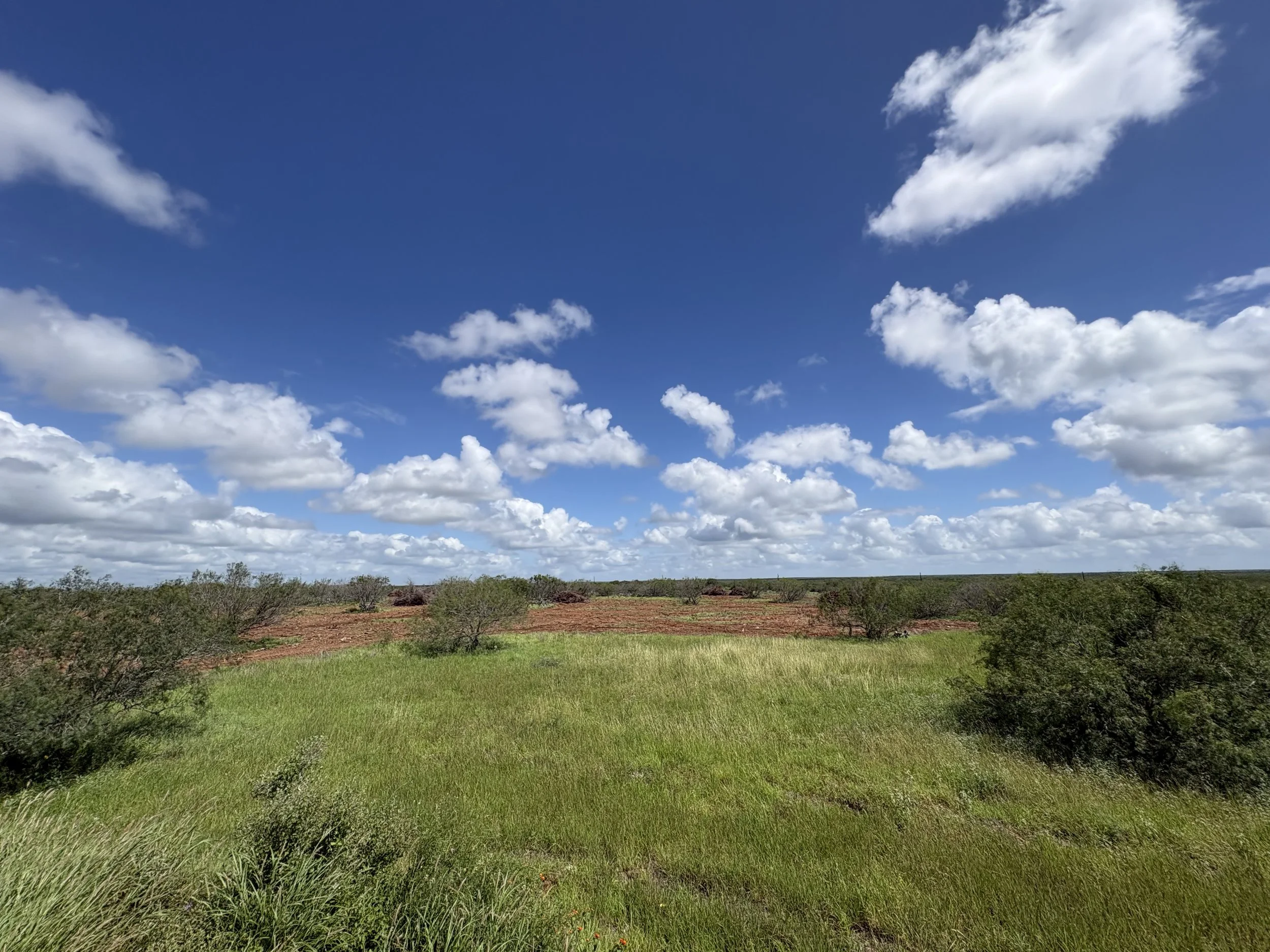
Post dozing